Tuesday, August 30, 2011

Learning and Life Collide: Making Yogurt


Dining at a friends home recently, the hostess inspired me as she began heating milk to make yogurt. As we visited, she told me she had been doing this for quite some time. Me, I had never tried. However, with a family of nine consuming a minimum of 3 quarts of yogurt a week, I was empowered to give the process a try. My friend shared her yogurt making wisdom--explaining the cooler method she found by trial and error to be easiest.

When I returned home, I began my first yogurt making attempt by placing "homemade cooler yogurt" into a search engine. I read. I compared. I gathered needed equipment, most of which I had. My first attempt was successful, very successful, and I realized this process was yet another example of how learning and life collide. I wanted to involve my children in the process.

The first attempt, a successful walk through for me, I decided I understood the process enough to involve my children for my second yogurt making event. I retrieved the candy thermometer (left over from our yummy lollipop making experiments) from safe storage and gave the children a quick review about the care, use, and purpose of a thermometer. They were, once again, intrigued. We attached the thermometer to the side of the pot, poured in the milk, and turned the burner on medium. Each took a turn stirring. We periodically checked the temperature of the milk, giving us repeated practice reading a thermometer. One of the children drew a thermometer with the current temperature of the milk. A great way to incorporate multiple learning modalities.

As the milk heated we prepared the canning jars and discussed the difference between pints and quarts. The oldest helpers reviewed how many pints and quarts were in a gallon. One of the children suggested we pour pints of water into our empty milk jug to see if our calculations were indeed accurate; an excellent visual for our younger learners to have a concrete experience in measurements. We followed the remaining instructions and placed our yogurt into a cooler to "culture". After eight hours of "culturing" in the cooler, we placed our fresh yogurt in the refrigerator. We were all very excited about what we had accomplished together. In fact, we were all so enthused we decided to calculate how much money we had saved by making our own yogurt. What a learning experience!

My third attempt produced yogurt which was just a tad thicker than milk. Still yummy, just runny. Trying to figure out what went wrong. However, with fresh fruit, it made great breakfast smoothies.

There are several recipes, some using milk, others using soy or powdered milk. Experiment and choose what works best for your family.

Helpful links for yogurt making:

Crockpot versions:
This crockpot version has become my favorite, though my ancient crockpot takes six hours on high to reach 180 degrees! Still beats having to worry about stirring in between family needs. I simply put the milk in the crockpot at 9 AM and never open the lid until 3 PM when I check the temperature and begin the cooling process. When the milk lowers to 110degrees, I add the starter, wrap in a towel and place in a cooler overnight. BEST yogurt ever! It was worth the tweaking to figure out what process worked best for our family.


Saturday, August 20, 2011

Singing Catchy Tunes At Our House

I remember every lyric to the Saturday morning Schoolhouse Rock tunes my brothers and I would watch. Those lyrics helped me learn complicated (at least for me) grammatical and mathematical concepts. Imagine my delight when a friend sent me a link to a You Tube video of one of my favorites! It wasn't a Schoolhouse Rock tune, but it was one I remember hearing somewhere. Nonetheless, I remembered the concept of silent e after listening time and time again. This morning, I immediately clicked the link to let my seven year old daughter listen. She had just reviewed the silent e concept the day before, so she was super excited about the upbeat ditty.


more silent e

two vowels go walking

-ly words (adverbs)

The Hound Song

contractions

th words

50 states and capitols

first ten elements of the periodic table

counting by fives


Happy learning!

Friday, July 1, 2011

On the Edge of Our Seats


"Read one more!" My daughters pleaded.

Chapters in in the life of Betsy Ross are unfolding in our home. Quakers. Samplers. John Ross. The woven tapestry of Betsy Ross: Designer of Our Flag is just one book in the well-known Childhood of Famous Americans series. Author Ann Weil transports readers to the streets of pre-Revolutionary Philadelphia where Betsy enters the High Street Fair. A Quaker, the path to the fair was less than smooth, riddled with decisions, questions, and reflection. And we are in the midst, wrestling with Betsy's thoughts and then...well, I just can't say. It would ruin the story.

What will become of John Ross? When will Betsy sew the flag? We must keep reading to find out.

If you find yourself on the edge of your seat wondering what happens next, check out these additional resources about Betsy Ross.

Read:
F is for Flag by Wendy Lewison
The Fourth of July Story by Alice Dalgaliesh
A is for America by Devin Scillian
Stars and Stripes: The Story of the American Flag by Sarah L Thomson

Research:

Locate:
  • Philadelphia on a map. In which state is Philadelphia located? How much distance is between Philadelphia and the city in which you live?
Do:


Wednesday, June 22, 2011

One Potato, Two Potato

The fresh smell of spring and the heat of summer bring gardens of plentiful learning activities. Seems like every time we turn around we are enjoying another experience involving fruits and veggies. Here's a sampling of our fun, with a few extras tucked in for good measure. (For readers who heard me speak at the FPEA-Florida Parent Educators Association-Convention, some of these will sound familiar).

Math

  • Estimate the weight of a watermelon. Weigh on a bathroom scale. Figure out the price per paid per pound.
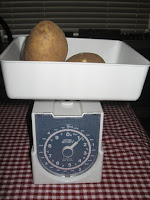
  • Purchase a five pound bag of potatoes. Compare the quantity with a five pound bag of onions. Why the difference in quantity per pound? Younger children can weigh potatoes and arrange from lightest to heaviest.
  • Buy a basket full of veggie. Sort according to what part of the plant is eaten: stem, leaf, seed, root, flower. Eat vegetables and dip for snack.
Language Arts
  • Read Growing Vegetable Soup by Lois Ehlert. Make veggie soup for dinner. (Dad will love eating what the children learned.)
  • Read the Farm Alphabet Book by Jane Miller. Make your own fruits and veggies alphabet book.
  • Play Garden Match to learn beginning consonants.
  • Read Eating the Alphabet: Fruits and Vegetables from A to Z by Lois Ehlert.
  • Read Stone Soup by Marcia Brown (a traditional tale).
  • Read Tops and Bottoms by Janet Stevens (a trickster tale).
  • Make a growing vegetable soup lapbook.
  • Read The Tiny Seed by Eric Carle.
Spanish

Social Studies
  • Tour the produce section of the grocery store.
  • Visit a working farm, garden store, orchard, or greenhouse.
Science
  • Plant a garden.
  • Build a grow box and grow herbs.
  • Spout seeds. Discuss vocabulary: seeds, seedlings, cuttings, sprout, germinate.
  • Read The Vegetables We Eat by Gail Gibbons
  • Read Green Beans, Potatoes, and Even Tomatoes by Brian Cleary
  • Read One Bean by Anne Rockwell.
  • Sprout an avocado seed.
  • Grow or purchase a pie pumpkin. Open. Clean. Bake. Puree pumpkin and make bread.
  • Read The Life Cycle of a Bean by Linda Tagliaferro.
  • Read Foods from Farms by Nancy Dickmann.
  • Read Plants on a Farm by Nancy Dickmann.
  • Read Farming by Gail Gibbons. Discuss farming around the world.
  • Read From Seed to Plant by Gail Gibbons.
  • Read Planting a Rainbow by Lois Ehlert.
  • Read The Victory Garden Vegetable Alphabet Book by Jerry Pallotta.

Arts
  • Make prints using tempera paints and fruits and veggies (potato, cabbage, celery, corn, and oranges)
  • Read Linnea in Monet's Garden by Christina Bjork.
  • Make a seed collage.
  • Sing Oats, Peas, Beans and Barley Grow. Act out the song with motions.
  • Read How Are You Peeling? by Joost Effers and Saxton Freymann. Discuss the illustrations. Children may also enjoy Fast Food by the same authors.
Movement
  • Play Hot Potato (hand-eye coordination)

Wednesday, December 22, 2010

Ever Wonder How the SAT and ACT Differ?

I am frequently asked how the content of the SAT and ACT differ. This morning I was forwarded this link. Hope the information contained on the blog will help those who may have questions.

http://www.homeschoolnewslink.com/blog/?p=241

Warning! There is an amazing amount of helpful information on the blog. You may find yourself immersed in gleaning wisdom :)

Thursday, November 18, 2010

Math in Our Lunch


We've encountered math in our lunch! Amazing how the best math lessons seem to happen spontaneously. How, you ask? Here are some examples (with some added extras for the adventurous):
  • Cut deli-sliced cheese and meat into equal parts. Discuss halves, quarters, thirds. Write the fractions (to extend to the symbolic representation).
  • Cut a sandwich in two equal pieces. Discuss equal and half. Write the fraction. Older children could cut sandwich into fourths. Discuss equal fractions and introduce adding fractions with like denominators.
  • Cut rectangle slices off the end of a rectangular prism of cheese. Find other rectangular prisms in the kitchen (boxes of crackers, cereal, tea bags, etc.).
  • Identify additional solid figures (cubes, cones, spheres, and cylinders). Compare to geometric shapes: circle, rectangle, square, triangle, and oval.
  • Cut each rectangle slices of cheese into two squares and placed on a circular cracker. Find other squares and circles around the house. Look for right angles. Discuss straight and curved lines. Estimate the circumference of the cracker. Write the number to represent the estimate. Measure circumference of the cracker with a string and then measure the string with a ruler. Write the actual length and find the difference between the estimate and the actual.
  • Measured the height, length, and width of the faces of the cheese block. Older children could calculate the volume.
  • Discussed right angles, sides, angles, faces, length, width, height, circumference, diameter, and radius.
These an other kitchen math adventures are available in my Flip Three Pancakes with One Spatula book.

Helpful resources:
http://www.mathsisfun.com/geometry/cuboids-rectangular-prisms.html (concept explanations)
http://www.tcpl.lib.in.us/youth/mathconcepts.htm (book lists for related math topics)
http://www2.ed.gov/pubs/parents/Math/grocerymath.html (math in the grocery store)

Saturday, September 18, 2010

Aldi Deal Turned Amazing Math Lesson

Haven't blogged since late June...evaluation season, summer, husband home, morning sickness, pre-writing research, let's just say, blogging sadly took a back seat.

Had to take a break from my day's schedule of writing and grading to pass along the wonder and enjoyment of a learning adventure which took place in our home today. It all started with a milk-induced trip to the local Aldi supermarket. Further down the milk aisle, a fabulous deal on sixteen inch pizzas caught my eye. I loaded four into my cart.

Arriving home, children welcomed me. MILK! We unloaded, and of course the twenty-inch pizza boxes caught their eyes. Never (except for at Nanny's house on Sunday when she feeds fifteen to twenty people) had they seen so many pizza boxes. We quickly discovered the large boxes would not fit in the freezer (our first math problem). We took the pizzas out of the box and the next thing I knew shouts of joy and creativity pierced my ears. They wanted the boxes for "their restaurant".

After saving the cardboard boxes from a trip to the recycle bin, the four girls, ages four to twelve, began to brainstorm what diameter pizza would fit in the box. This was done by invading my buffet of circular platters. Each platter, after estimating its size, made its way into the box confirming the hypothesis of whether or not it would fit. Large pizza size- solved! "Oh, wait we need medium and smalls!" I heard. "We have to figure out the size of the small pizzas and see how many will fit in one box." Within an hour, a variety of small, medium, and large crusts lay on the kitchen table.

Next: the toppings. The four girls began helping one another cut geometric shapes from our scrap box of construction paper: circle pepperoni, oval sausage, triangle mushrooms, and rectangle cheese. An hour and thirty minutes later, pizzas were complete. Time to make menus.

When given the time and access to resources, great learning takes place. Oh, yes, there was mess- hundreds of shredded pieces of construction paper on the carpet. I decided to do some writing in the next room (within earshot, of course)so I would torture myself by watching the paper shredding process. Somehow, two and one-half hours later (yes, I was in and out of the room, but chose not to stress) the learning that took place outweighed the confetti party on my carpet.

The girls have now invited the neighbor over to play pizza delivery with menus and prices, so the learning continues. And I did nothing (except make the platters, paper and glue available) to make it happen. I could not have planned it any better.

Sorry there are no pictures...perhaps I will add them later when the pizzas are not being played with, I mean learned with!

Math and pizza related library resources:
Pizza Counting, Christina Dobson
Little Red Hen Makes a Pizza, Philmon Sturges
Let's Make Pizza, Mary Hill
The Coin Counting Book, Rozanne Lanczak Williams
Give Me Half, Stuart Murphy
Dimes, Mary Hill
Dollars, Mary Hill
Piece=Part=Portion, Scott Gifford

Want more ideas about how to teach math through everyday learning experiences, especially food preparation. Check out my book Flip Three Pancakes with One Spatula.